


The Living Room Savanna: a Technical Overview of Pre-Sleep Circling in Canines
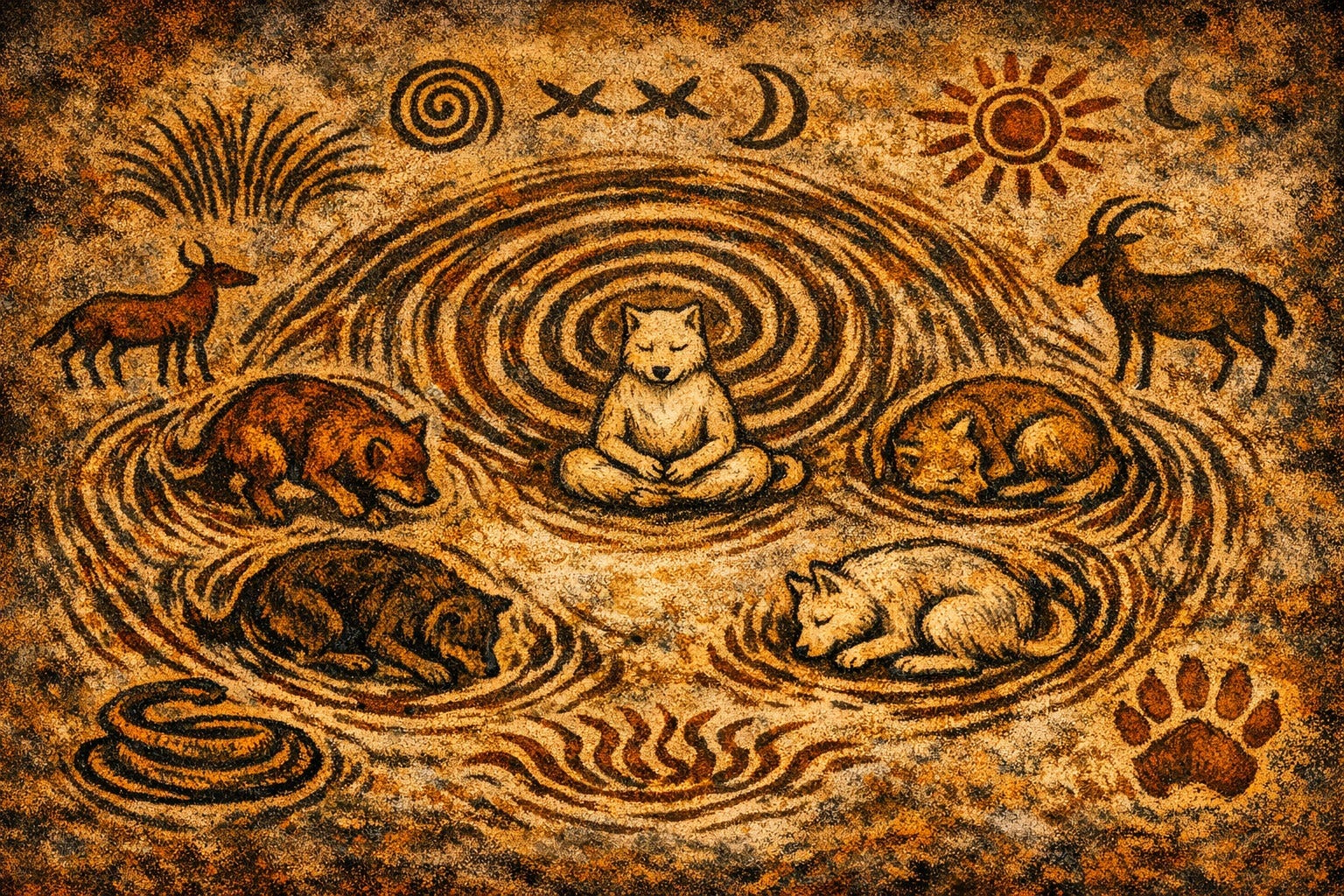
Whether resting on a luxury orthopedic bed or a hardwood floor, the domestic dog (Canis lupus familiaris) almost invariably engages in a rhythmic, circular ritual before settling down. This behavior is not a modern quirk but a deeply conserved ancestral instinct. To understand why dogs circle, we must look at the intersection of evolutionary biology, physics, and sensory ecology. The following overview transitions from the most robustly supported biological explanations to the more speculative and folkloric theories that have permeated human culture.
The Biological Blueprint: Evidence-Based Explanations In the scientific community, pre-sleep circling is categorized as a fixed action pattern. This is an instinctive sequence of movements triggered by a specific stimulus, which in this case is the intention to rest. Several peer-reviewed theories explain the survival advantages of this ritual.
Thermoregulation and Nest Construction: In the wild, canids lack the luxury of climate-controlled environments. Circling serves as a mechanical method of site preparation. By trampling down tall grass, snow, or leaves, the animal creates a flattened, contoured surface. This bowl serves a dual purpose: it displaces potential irritants like thorns or insects and creates a thermal microclimate that helps retain body heat during sleep.
Tactile Threat Assessment: Beyond comfort, the physical act of treading the ground allows the dog to identify hidden hazards. Sharp rocks, snakes, or uneven terrain are felt through the paw pads before the dog commits its vulnerable soft tissue to the ground.
Situational Awareness and Surveillance: Sleep is a state of high vulnerability. A 360 degree rotation allows the animal to perform a final visual and olfactory scan of the environment. This rotation verifies the location of pack members, identifies potential escape routes, and ensures no predators are approaching from a blind spot.
Musculoskeletal Preparation: Similar to human pre-sleep stretching, the circular motion serves as a low impact warm up for the joints and spine. This movement may help the animal find a postural alignment that minimizes joint strain during long periods of stillness. This is often why geriatric dogs or those with osteoarthritis exhibit more labored or frequent circling as they seek a pain neutral position.
Geomagnetic Alignment: A more contemporary and specialized area of study involves magnetoreception. A 2013 study published in Frontiers in Zoology suggested that dogs prefer to align their body axis with the Earth’s magnetic field, specifically along a north south line, during excretion and rest. Circling may be the mechanism by which they calibrate their internal compass to find this optimal alignment.
Scent-Based Territoriality: Dogs possess interdigital glands located between their paw pads. As the dog circles and paws at the ground, it deposits pheromones and scent markers. In a social pack dynamic, this subtly claims the specific sleeping spot, reducing the likelihood of intra-group conflict over resting territory. The Conceptual Hinge: From Biology to Belief While the aforementioned theories provide a rigorous framework for understanding the how and why of canine behavior, the human canine bond has existed for tens of thousands of years. In the absence of modern ethology, humans developed their own interpretations of these movements. These cultural knots of folklore often mirror scientific truths but are wrapped in the language of myth, observation, and anecdote. Folklore and Common Tropes: Unsupported Theories As we move away from biological data, we find explanations that, while culturally resonant, lack empirical evidence.
Stomping Out Snakes: A staple of rural folklore, this theory suggests dogs circle specifically to flush out or kill serpents hidden in the grass. While the behavior does displace pests, there is no evidence that it is a specialized anti-predator tactic specifically evolved for snakes.
Winding Down the Spirit: Certain animist and spiritual traditions view the circling as a ritualistic settling of energy. In this view, the dog is not just preparing a physical space, but a spiritual one, calming its inner fire or spirit to ensure a peaceful transition into the dream world.
Directional Pack Signaling: Some older traditions held that the way a dog flattened grass acted as a directional marker or signpost for other pack members to find their way home. Modern tracking and scent marking studies suggest that vocalizations and pheromones are far more effective signals than flattened grass patterns.
Pathological Compulsion: A modern trope often labels circling as obsessive compulsive. While canine compulsive disorder is a diagnosed veterinary condition, it is distinct from normal pre-sleep circling. Healthy circling is a functional, adaptive ritual, whereas pathological circling is repetitive, purposeless, and often occurs outside the context of sleep. Conclusion The core truth of the canine bed time ritual is that it represents an ancient, deeply hardwired legacy. Even when your dog is on a plush memory foam mattress, in some neurological sense, they are still trampling down the savanna grass of their ancestors. They are securing their perimeter, checking the wind, and claiming their place in the world, one rotation at a time.
Music Cue:
a Guided Meditation honoring science first, then folklore, then the deeper ritual of rest, repair, and dreamstate.
Circling before Rest
a Guided Meditation to support a Safe Rest
Settle into your space. Let the body know that nothing is required of it yet. You are simply arriving.
I. The Physical Circle
Before we begin, you may stand or remain seated. Either way, imagine the ancient instinct of the canines who came before us. Their circling was not fidgeting. It was wisdom. It was preparation. It was the body making a place safe enough to surrender into.
In the wild, a wolf would circle to flatten the ground, to clear away thorns and stones. To make a nest. To check the perimeter one last time before becoming vulnerable. To orient to heat or cold. To signal to the pack that it was time to rest.
Let your body echo that instinct. If you are standing, take a slow turn around your space. If you are seated, let your awareness trace a circle around your space, as if your consciousness were turning in place.
One slow revolution. Then, another.
Perhaps yet another. Let the body feel the perimeter of its world. Let it flatten the ground beneath you, even if only in the imagination.
Let the body say: this...is where I will rest.
Pause. Settle. Feel the nest you have made.
II. The Mental Circle
Now we repeat the ritual on the level of mind.
Imagine your thoughts as tall grass. Not obstacles. Simply unflattened overgrowth. The circling mind is not restless. It is preparing. It is clearing a place where thinking can soften into a deep quiet.
Make a slow mental circle. One full turn around the edges of your awareness. Notice what is sharp. Notice what is soft. Notice what is simply there.
Then, another revolution.
Then, perhaps - yet another.
With each revolution, the mind presses down the unevenness. Not to erase it. To make it safe to lie down within it.
Let the mind say: this...is where I will rest.
III. The Emotional Circle
Now the emotional body circles.
Emotions, like pack animals, need to know where everyone stands before they settle. They need to know that nothing is approaching from behind. They need to know that this nest is theirs.
Let your emotional self make a slow turn. A full circle around your inner landscape. Not judging. Not fixing. Simply scanning, the way a dog glances once more at the horizon.
Then, the emotional body takes another, slower, revolution.
Then, perhaps - yet another...still slower revolution.
Is there fear? Is there tenderness? Is there longing? ...Is there relief?
Whatever is present, let the emotional body acknowledge it with the same instinctive clarity a wolf uses to read the wind.
Then, let it settle. Let it curl into itself.
Let the emotional body say: this...is where I will rest.
IV. The Spiritual Circle
Now the deepest layer circles.
In folklore, dogs turn to face the unseen. Some say they align with the Earth’s magnetic field. Some say they check for spirits. Some say they orient toward the rising sun. These stories, while not literal, are ways of naming the instinct to harmonize with forces larger than any one self.
Let your spirit circle once. A slow, peaceful, quiet, and poetic revolution. Feel for alignment. Feel for direction. Feel for the subtle shift when the inner compass clicks into place.
Then, another circle.
Then, another spirit circle.
Then, perhaps - yet another...
Soon we see the spirit settle.
Hear the spirit say: this...is where I will rest.
V. Rest, Repair, & Dreamstate
Now all four layers have circled. All four have made their nest. All four have scanned the horizon. All four have signaled to the pack within - that it is time to lie down.
It is time to receive deep rest...
It is time to welcome deep rest...
It is time to recover in deep rest...
It is time to heal in deep rest...
It is time to sing spirit stories...in deep rest.
It is time to meet truth (once again)...in deep rest.
Let the breath deepen.
Feel the breath deepen.
Let the body soften.
Feel the body soften.
Let the mind dim its lantern light.
Feel the mind dim its lantern light.
Let the full emotional field quiet.
Feel the full emotional field quiet.
Let the spirit curl into its warm center.
Feel the spirit curl into its warm center.
You are entering the territory of repair. The place where the body mends itself. The place where the mind unwinds its many knots. The place where emotions settle into their true shapes. The place where the spirit dreams in symbols older than any language.
Rest here... Breathe here... Feel the nest you have formed as it perfectly holds you.
When you are ready to return, please do so slowly. Not by standing abruptly, but through a slow uncurling. Tea leaves in warm waters. Rise the way a wolf rises from sleep- with softness... with awareness... with the knowledge that you can circle again whenever you need to make a place safe for rest.
Thank you
.


